
Policy engagement
Prof. Samir KC in Ashgabat: launching Turkmenistan’s national human capital planning system
8–12 September 2026 | UNDP Turkmenistan
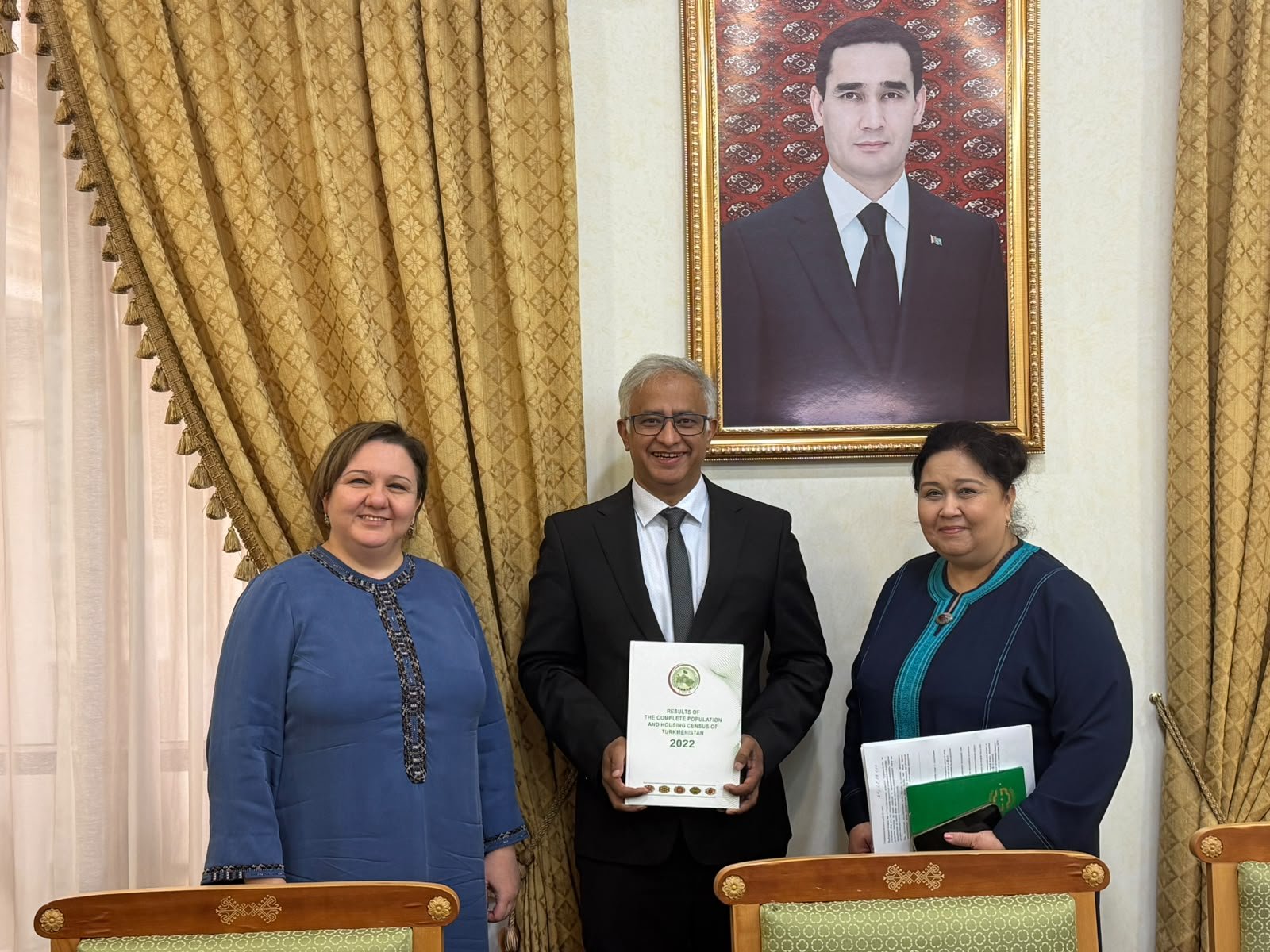
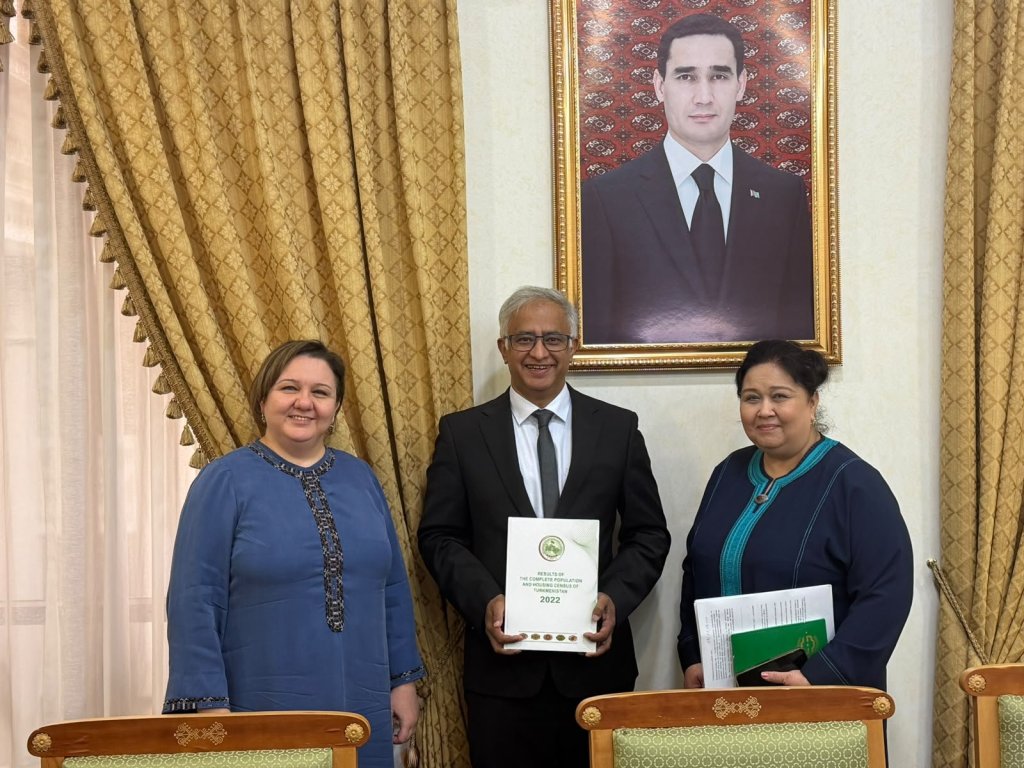
Prof. Dr. Samir KC spent 8–12 September 2026 in Ashgabat on the first mission of a UNDP Turkmenistan project implemented with the Ministry of Education, the National Human Capital Strategic Planning System. Samir leads the international expert team, engaged through PMCG, that is building the analytical core of the project: a multidimensional model of population, education and labour force participation, and a skills demand model by occupation and sector.
On 9 September, UNDP and the Ministry of Education held the official launch and first coordination meeting of the inter-ministerial working group, opened by Narine Sahakyan, UNDP Resident Representative in Turkmenistan, and Azat Atayev, Deputy Minister of Education. Representatives of fourteen ministries and agencies took part. Samir presented the project’s approach and the preliminary evidence base built from the 2022 census, household surveys and official statistics.
Over the following two days the team met the State Committee on Statistics, the Ministry of Labour and Social Protection, the Ministry of Finance and Economy, the Union of Industrialists and Entrepreneurs, the State Migration Service, and university representatives, as well as the international partners UNFPA, UNICEF, IOM and ILO, to review available data, discuss the model design, and agree how each institution will contribute. The mission closed with a meeting at the Ministry of Education to review findings, address data gaps and agree on next steps.
The work applies the Population-Based Systems Model (POPSYM) approach developed in Nepal to a new country: demographic projections by age, sex and education that connect to skills forecasting and planning. The final framework, due in early 2027, will combine demographic scenarios, skills forecasting tools, governance arrangements and policy recommendations for Turkmenistan.

Reel · @undp_turkmenistan
Watch
Samir on what the project will answer
“We are here to analyse and understand how the demand for labour and skills will change in the future. Within the project we are looking at the prospects for Turkmenistan’s population and human capital to 2052, that is the next 30 years, by age, sex, education level and labour force participation. We will also project how the size and structure of the labour force will change.”
Prof. Samir KC, in UNDP Turkmenistan’s reel. Translated from the Turkmen and Russian caption.
Why it matters
Extending POPSYM to a new country’s national planning
- Linking demographic evidence directly to skills forecasting and education planning
- Building a country-owned model, not a one-off study, that the Ministry of Education can sustain and use
- Establishing data-sharing arrangements across ministries and statistical agencies
- Extending the POPSYM approach, developed in Nepal, to a new country context
News coverage
Reporting on the launch
UNDP’s own release is the public record of the launch:
Related work
POPSYM, tools, and research projects
This engagement is connected to wider work on population projection tools, POPSYM, and research communication.


Leave a comment