
We specialize in comprehensive demographic analysis, including the generation of a wide range of indicators and population projections. Our experience spans national, sub-national, and international levels, with successful applications in countries such as Nepal, including detailed ward-level projections for Kathmandu Metropolitan City, as well as Pakistan, Mozambique, and Moldova. Our work supports evidence-based planning and policy by delivering accurate, reliable, and actionable demographic insights tailored to the needs of governments, organizations, and development partners.
Population projection
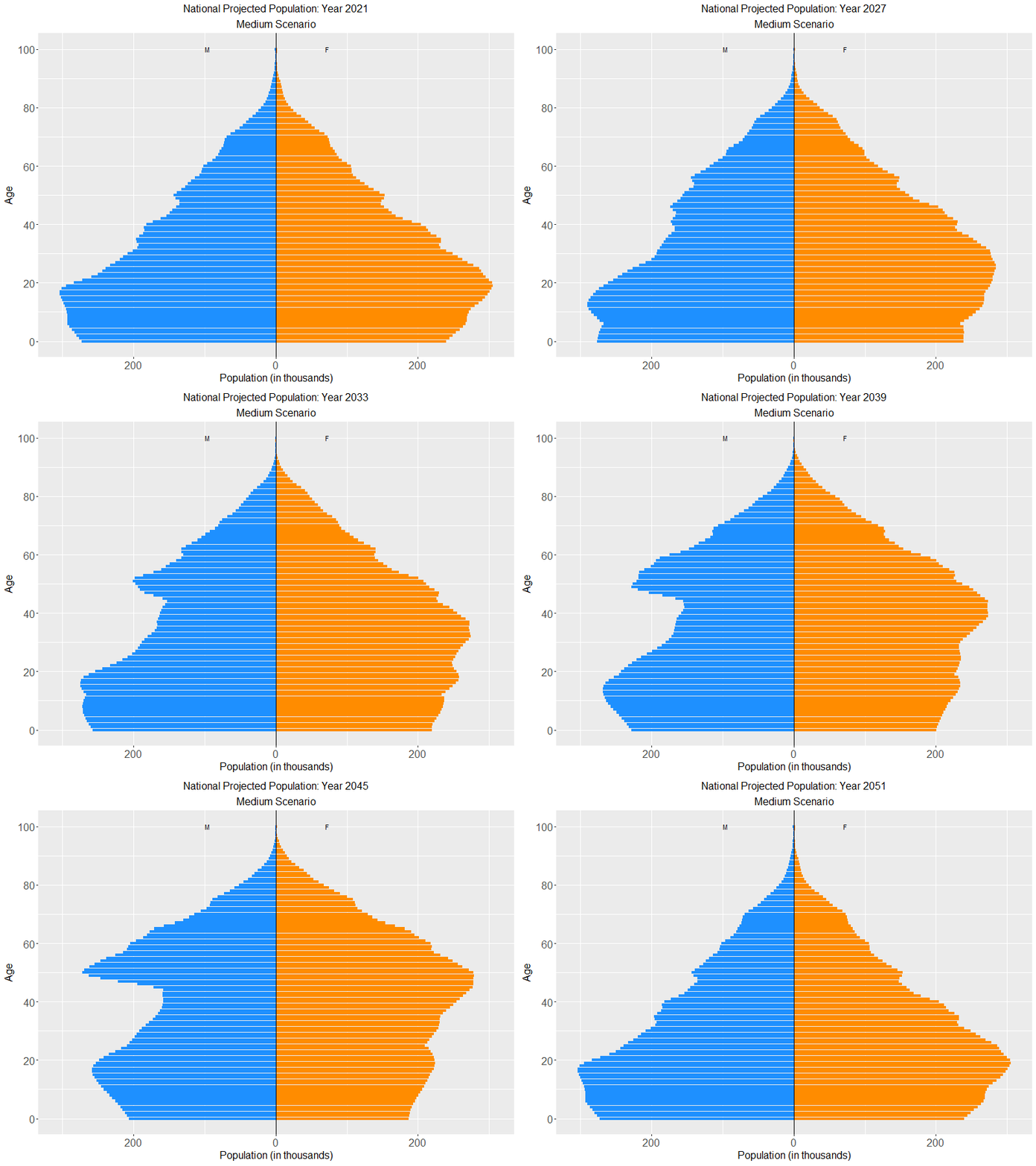
Population projection is a vital tool for understanding future demographic trends and supporting effective planning and policy-making. It involves estimating the future size and structure of a population based on current data and assumptions about fertility, mortality, and migration. Our expertise lies in developing robust, scenario-based projections at national, sub-national, and local levels, using both cohort-component and multidimensional methods. These projections help governments, organizations, and development partners to anticipate future needs in areas such as health, education, employment, and infrastructure, ensuring more informed and strategic decision-making.
Multidimensional method
The multidimensional population projection method incorporates additional components beyond fertility, mortality, and migration—such as education, labor force participation—that directly influence demographic dynamics. By accounting for these interrelated factors, this approach provides a more realistic and nuanced understanding of future population changes. This method is especially valuable for sustainable planning, policy formulation, and evaluating the potential effects of interventions across multiple sectors.
Cohort component method
The cohort-component method is a traditional and widely used approach to population projection that follows each birth cohort over time, accounting for changes due to fertility, mortality, and migration. It provides detailed age- and sex-specific population estimates over a given projection period.
 PSR HUB